


How long does a hair transplant last? That is the question most people ask when they weigh time, cost and what they actually get.
Short answer: The transplanted follicles come from the donor area at the nape and sides. They are usually resistant to DHT and keep that property after the move. That is why a hair transplant is permanent for the follicles we move. The procedure does not stop hereditary hair loss in hair that was not transplanted. The overall look lasts best when we plan for future patterns, protect the grafts in aftercare and, when needed, slow the remaining hair.
This guide owns the durability question. How the result looks at months 1, 3, 6 and 12 is in hair transplant month by month. How many procedures you may need over a lifetime is in how many hair transplants can you have.
Is a hair transplant permanent?
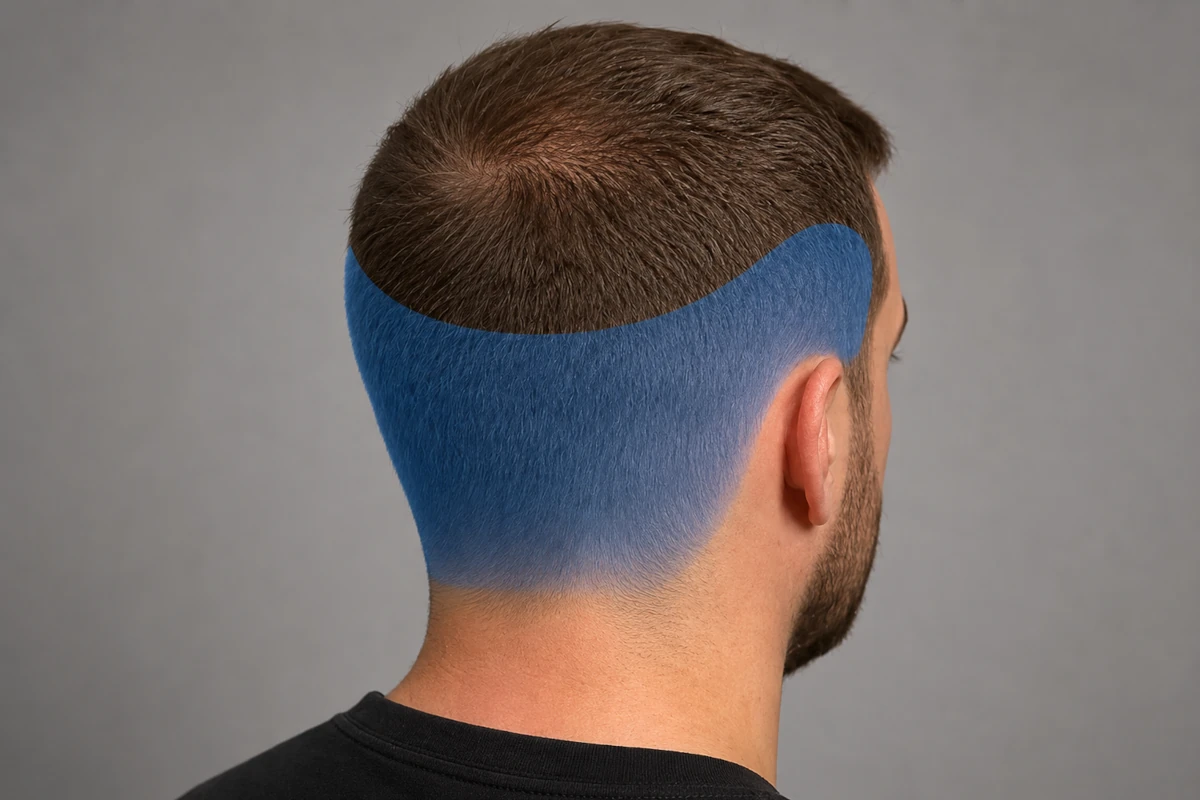
Yes – for the follicles we move. The principle is called donor dominance: a follicle takes its properties from the nape with it, even when it is placed in the crown or hairline.
In androgenetic alopecia the skin does not “kill” the hair. Individual follicles are genetically sensitive to DHT. At the temples and crown the growth phase shortens. The hairs become thinner and may stop being visible. Follicles in the permanent zone at the nape and sides do not react the same way. When we move them with FUE or DHI, that resistance comes with them.
So the answer to how long does a hair transplant last is not “a few years”. Established grafts produce hair for as long as you live. What can change the picture in the mirror is the hair we did not move, and how the grafts were cared for in the first days.
Transplanted hair and native hair – two timelines
A common misconception is that surgery switches off all hair loss. It does not create new follicles. It redistributes the ones you already have.
| Transplanted hair | Native hair that was not moved | |
|---|---|---|
| DHT sensitivity | Usually resistant | Remains in hereditary hair loss |
| Expected lifespan | Permanent, once the graft has established | Set by how aggressive the hair loss is |
| Needs finasteride to survive? | No | May be needed to slow further thinning |
| What you see over time | Stable density in the treated field | Can thin around or behind the transplant |
If native hair keeps thinning you can get inverse alopecia: a dense transplanted field surrounded by new sparseness. That is not the transplant stopping. It is the rest of the scalp following its own genetics. That is why we plan hairline and density from how the pattern may look in five or ten years, not only how it looks today.
What can actually affect how long the result lasts
1. Graft survival in the first days. For the first 8–10 days the grafts sit in place before new capillaries have secured them. Friction against a pillow, early exercise or picking at scabs can cost grafts. The details are in the aftercare guide.
2. Ongoing hair loss around the transplant. This is the most common reason the overall look changes after a few years. Finasteride and PRP protect native hair, not the follicles already moved.
3. The donor area. Each graft taken does not grow back in the nape. An even, careful extraction (here with punches of 0.6–0.9 mm) protects both the look there and the option of a later treatment. A maximum session sits around 3,500 grafts.
4. Ageing. Even DHT-resistant hairs can become thinner with the years, like other body hair. That is not the same as the result “wearing off”.
5. An unrealistic hairline in younger patients. A line set too low while hair loss is still active can look wrong when the temples behind it keep receding. That is why we plan more conservatively under 25. Read hair transplant under 25.
Do you need more than one treatment for it to last?
Many people reach their goal after one procedure. Others need a later session – for more density, for a new area that has thinned, or because larger surfaces were planned in stages.
That is not a sign that the first treatment “ran out”. It is how hereditary hair loss works. A new assessment is made at the earliest when the result has matured, usually after 12 months. The full logic of donor reserve and timing is in how many hair transplants can you have.
FUE and DHI last equally long. The difference is how grafts are placed, shaving, and how many grafts are reasonable per session – not how many years the hair then grows. Compare the methods in FUE vs DHI.
The timeline until you can judge durability
Shock loss in the first weeks is not the result disappearing. The shafts shed. The follicles stay. New growth usually shows from month 3. Density is clearer at month 6. The mature assessment is at 12 months, sometimes up to 18 months on the crown.
Step by step, month by month, is in hair transplant month by month. Biological growth rate in centimetres is in how fast does hair grow.
Our guarantee applies provided at least 12 months have passed and the instructions have been followed. If grafts have not grown as promised they can be replaced at no extra cost, when the conditions are met.
How to keep the overall look afterwards
- Follow aftercare for the first two weeks. That is when the grafts anchor.
- Expect that the final result will not show in one month. Compare photos at 6 and 12 months, not with day 10.
- Talk about finasteride if native hair is still actively thinning. It is a choice based on your health, not a requirement for the transplant to survive.
- PRP can support healing and remaining hair. With a transplant we often recommend six treatments at cost price.
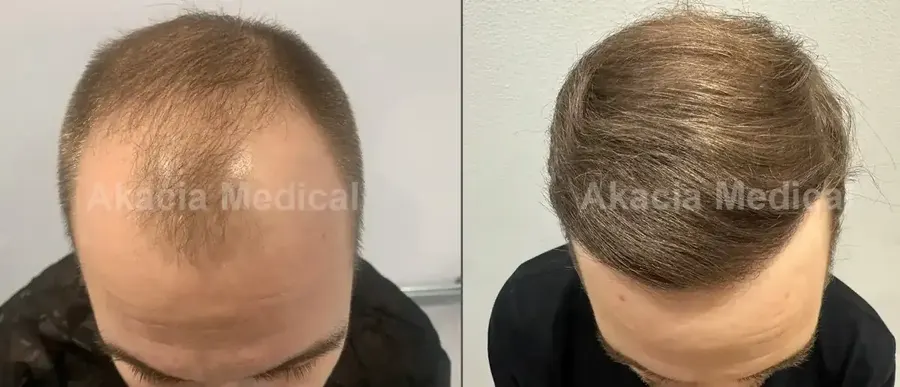
- See documented cases in before and after.
Want to know what is realistic in your pattern? Start with a free consultation. We set a plan that should last – not only look good in the first year.
This text is for informational purposes only. For medical advice or diagnosis, consult a qualified professional.
Frequently asked questions
Tags
Related information
Explore more about our treatments and services

Firo Esmer
CEO, Akacia Medical
Firo Esmer is CEO and founder of Akacia Medical and writes about hair transplantation, hair loss and treatment planning based on the clinic's experience and patient journey.
References
- 1.Goldin J, Zito PM, Raggio BS. Hair Transplantation. StatPearls. Updated 2025.
- 2.Jimenez F, Alam M, Vogel JE, Avram M. Hair transplantation: Basic overview. J Am Acad Dermatol. 2021.
- 3.Rose PT. Hair restoration surgery: challenges and solutions. Clin Cosmet Investig Dermatol. 2015;8:361–370.
- 4.Orentreich N. Autografts in alopecias and other selected dermatological conditions. Ann N Y Acad Sci. 1959.
Related articles
September 16, 2026
Hair transplant month by month
Hair transplant month by month: what you see after 1, 3, 6 and 12 months. Shock loss, early growth and when the final result can be assessed.
September 10, 2026
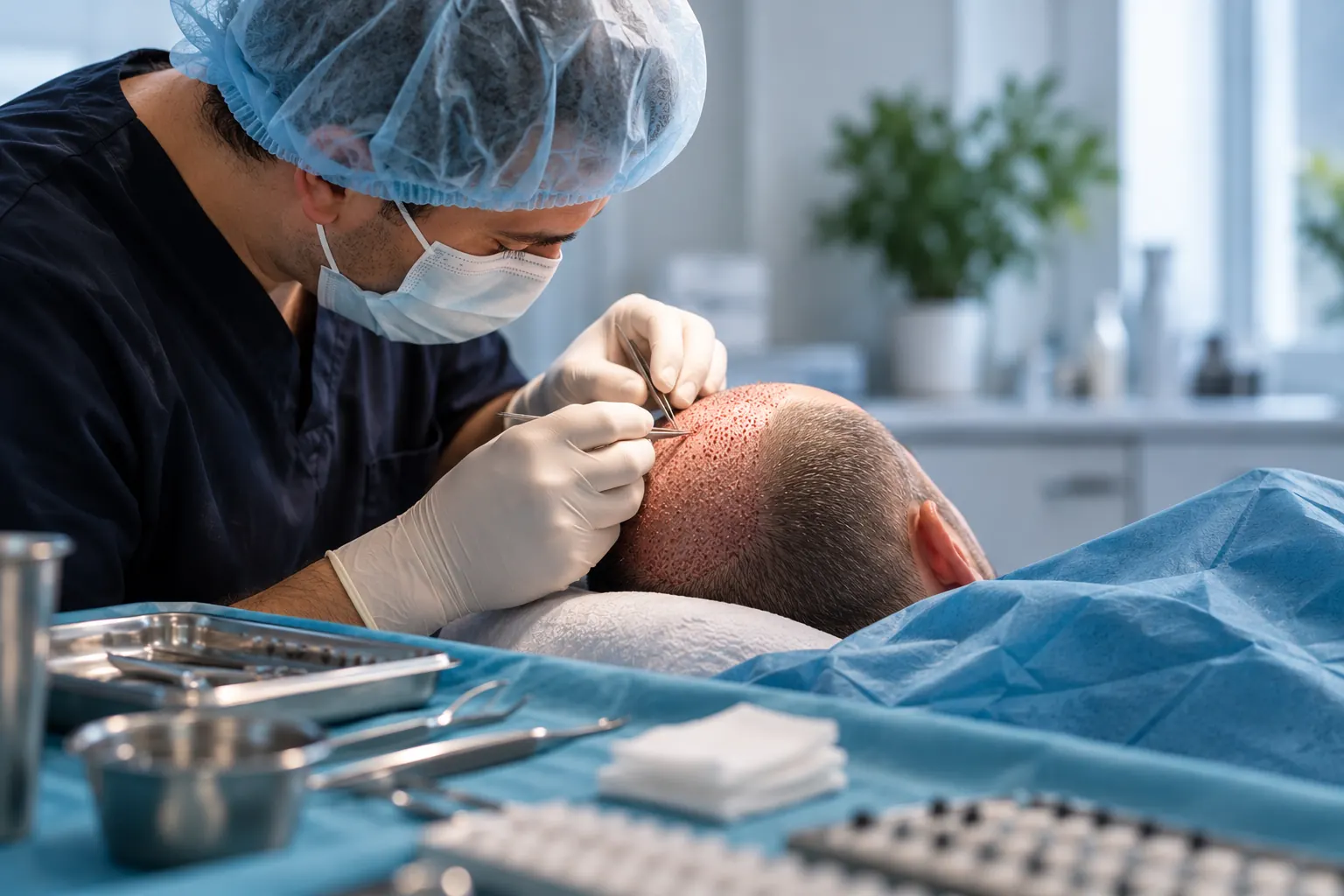
Does a hair transplant hurt?
Does a hair transplant hurt? How local anaesthesia works, what you feel during the procedure and how tenderness is handled in the first days.
September 3, 2026
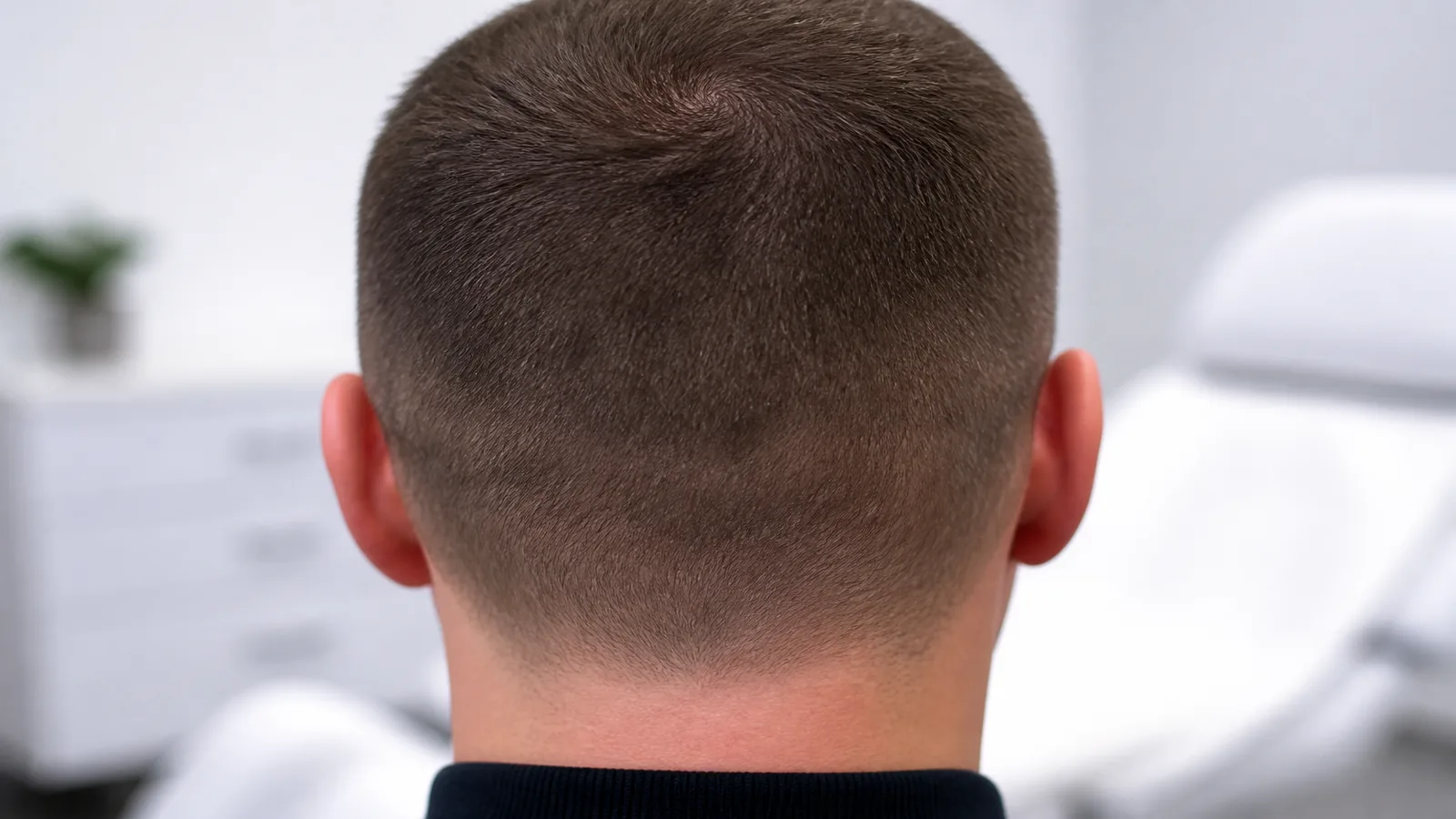
Hair transplant scars – FUE, FUT and healing
How visible are scars after a hair transplant? The difference between FUE and FUT, healing in the donor area, and how older scars can be hidden.
Book a free consultation
We will review your circumstances and recommend the right next step for you.