


DHT is the hormone behind most cases of hereditary hair loss. Here we explain how it is formed, why some follicles are sensitive and what can actually be done.
Short answer: DHT, dihydrotestosterone, is formed from testosterone. In people who are genetically sensitive, the hormone binds to follicles at the hairline and crown, causing them to shrink. That is the most common explanation for hereditary hair loss – not having "too much testosterone".
DHT is a natural androgen. It is needed for sexual maturation and contributes to beard growth. The same hormone can at the same time thin the hair on your head. The difference lies in the sensitivity of the follicle, not in DHT always being harmful.
What is DHT?
DHT is dihydrotestosterone. The enzyme 5α-reductase, especially type II in the scalp and prostate, converts testosterone into DHT. DHT binds more strongly to the androgen receptor than testosterone does. In sensitive follicles the growth phase shortens, the hair becomes thinner and eventually only vellus hair remains.
The process is called miniaturisation. It is slow and follows a pattern: temples, hairline and crown in men, and more even thinning over the crown in many women. The follicles at the back of the head are usually less sensitive. That is why they can be used in a hair transplant.
- Testosterone is converted into DHT via 5α-reductase
- Sensitive follicles shrink – not all follicles
- Without treatment, the pattern usually continues over time
DHT in men and women
Men. Androgenetic alopecia in men is clearly linked to DHT. Finasteride lowers DHT and is the most studied medical treatment. Minoxidil drives growth but does not block the hormone.
Women. Women have lower testosterone, but some follicles can still be androgen-sensitive. Female pattern hair loss often has several causes: hormones, iron, thyroid, menopause. Finasteride 1 mg is contraindicated in female hair loss. Investigation comes before treatment.
Why the beard reacts the opposite way
Beard and body hair are stimulated by androgens, especially DHT. That is why DHT-lowering medicines can in some cases make the beard marginally thinner, while protecting the hair on your head. For sparse beard growth, a beard transplant or local treatment is usually more relevant than chasing higher DHT.
How to influence DHT-related hair loss
Finasteride inhibits 5α-reductase type II and lowers DHT in the blood and the scalp. Prescription-only. The first choice when the goal is to slow male hereditary hair loss.
Minoxidil does not block DHT. It prolongs the growth phase in follicles that are still active. Over-the-counter topically, prescription-only orally.
PRP provides growth factors from your own blood. A complement while the follicles are still there, not a DHT blocker.
Hair transplantation moves more DHT-resistant follicles from the back of the head. The procedure does not protect the native hair that remains in the recipient area. That is why it is often combined with medication. A comparison of the options can be found in hair loss treatments.
Next steps
If your hairline is receding or your crown is thinning, DHT is often part of the explanation, but not always all of it. At the consultation we look at the pattern, the pace and what you have already tried.
Book a free consultation. We will tell you whether finasteride, minoxidil, PRP or a hair transplant makes sense – and whether DHT is not the main cause.
Read more about hair loss and androgenetic alopecia.
This text is for informational purposes only. For medical advice or diagnosis, consult a qualified professional.
Frequently asked questions
Tags
Related information
Explore more about our treatments and services
Firo Esmer
CEO, Akacia Medical
Firo Esmer is CEO and founder of Akacia Medical and writes about hair transplantation, hair loss and treatment planning based on the clinic's experience and patient journey.
References
- 1.Randall VA. Androgens and hair growth. Dermatol Ther. 2008;21(5):314-328.
- 2.Kaufman KD et al. Long-term (5-year) multinational experience with finasteride 1 mg in the treatment of men with androgenetic alopecia. Eur J Dermatol. 2002;12(1):38-49.
- 3.Imperato-McGinley J et al. Steroid 5alpha-reductase deficiency in man: an inherited form of male pseudohermaphroditism. Science. 1974;186(4170):1213-1215.
Related articles

September 21, 2026
Hair loss treatments – what actually works
Which hair loss treatments have evidence? Comparison of finasteride, minoxidil, oral minoxidil, PRP and hair transplantation.

September 17, 2026
Minoxidil for hair loss – topical and oral
Guide to minoxidil for hair loss: 2% and 5%, oral minoxidil in Sweden, use in women, timeline and side effects.
September 10, 2026
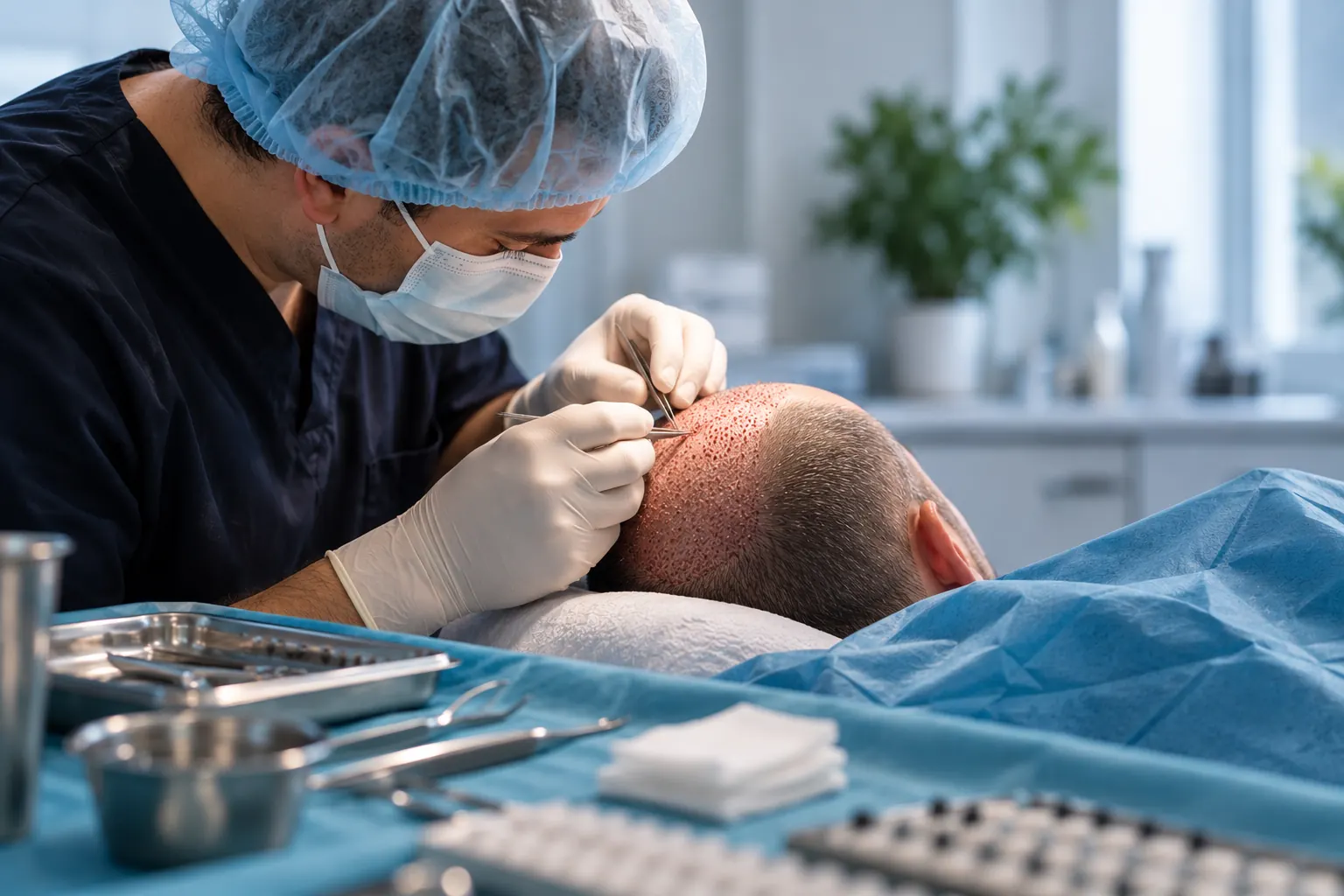
Does a hair transplant hurt?
Does a hair transplant hurt? How local anaesthesia works, what you feel during the procedure and how tenderness is handled in the first days.
Book a free consultation
We will review your circumstances and recommend the right next step for you.