

More public figures are talking openly about hair transplantation on podcasts, on Instagram and on TV. What once felt loaded is now something many discuss without hedging.
Below we cover profiles who chose to share their journey, how modern methods work in practice, and what is worth knowing if you are considering it yourself. We start with those treated at our clinic, because those are the results we can stand behind and show on film.
When hair loss becomes less taboo
Hereditary hair loss affects many people, often already in their twenties and thirties. The more people talk about it, the easier it becomes for you to ask questions without feeling odd. And it is not only a men's issue: hair transplants for women are often about high temples, line and symmetry rather than baldness.
A transplant is not “superficial” in the sense that you should feel ashamed. For many it is about feeling more like yourself again, in the mirror, at job interviews or in front of a camera. And the technique has become far more precise than it was ten to fifteen years ago.
Profiles who had their hair transplant with us
These are patients treated at Akacia Medical who let us follow them with a camera. What you get is not a marketing claim, but the whole process in their own words.
Joakim Lundell
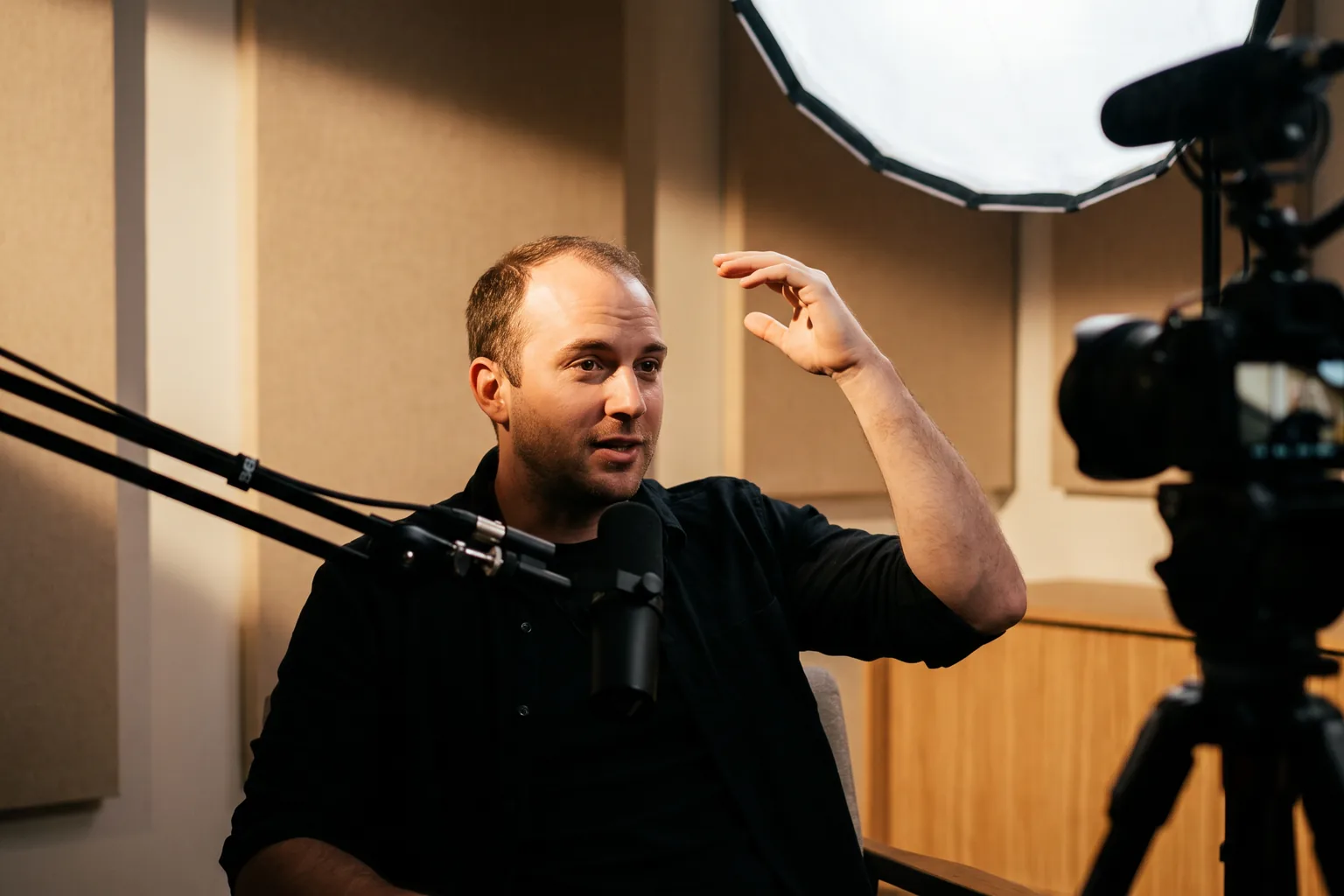
YouTuber and TV personality Joakim Lundell has spent years sharing both his hair loss journey and his transplant. With us he documented the process from consultation to result, which has made it far easier for many people to understand what a treatment actually involves.
- Jocke has his surgery – the experience before and during the procedure
- Joakim Lundell – Q&A after his hair transplant – recovery, sensation and result
- Joakim Lundell's patient story – the full before and after
Alexander D'Rosso
Alexander D'Rosso let us film his treatment in two parts. The first takes you through the day of surgery; the second is the follow-up where he shows the result and sums up his experience. Worth watching if you want to know what actually happens in the room before you book.
Love Pascal Prelog
Love Pascal Prelog shared his hair journey with a focus on the starting point and the planning — everything that happens before anyone touches a single graft. That is often where the result is really decided.
Cary
Cary walks through the entire process and shows his result afterwards. A straightforward account of the road from wondering about it to a finished result.
Want to see more? The full library is collected under patient stories.
International figures who spoke openly
These people went public about their procedures themselves, in their own posts, interviews or memoirs. None of them were treated by us, and the procedures were carried out abroad.
John Cena
Wrestler and actor John Cena has spoken openly about both his first and his second FUE treatment, more than twenty hours in the chair in total. He has said that the shame around male hair loss made him wait unnecessarily, and that he should have done it far earlier. His point is simple: you are not alone.
Joel McHale
Actor Joel McHale has been blunt about having had four transplants over the years. He has warned against older strip technique and prefers modern graft extraction, roughly what you know today as FUE. In short: the technique has moved forward, and it shows in both comfort and result.
AJ McLean
Backstreet Boys singer AJ McLean has described how hard it was to lose his hair after years of iconic hairstyles. He had his first transplant ahead of his 2011 wedding and has since talked about doing it again, without shame. His message is clear: it is fine to do something that makes you feel more like yourself.
Wayne Rooney
Footballer Wayne Rooney went public early and openly about his transplant. “I was going bald at 25, why not,” he wrote himself once the result was in. For many it was an eye-opener: even at the highest level of sport you can talk about hair loss without it being embarrassing.
Akon
In an interview, the artist Akon confirmed he had a transplant in Turkey for around $7,500 when his hairline started thinning at the front. He described the anaesthetic as the toughest part, not the placement itself. A good reminder that preparation and aftercare are part of the whole, whatever the country.
Cheyenne Jackson
In 2020 actor Cheyenne Jackson openly shared that he had undergone five transplants over fourteen years, and that he kept it secret for a long time. When he finally told the story it was less about hair and more about letting go of shame. It is a story many recognise, well beyond Hollywood.
Jimmy Presnell
After Love Is Blind, Jimmy Presnell described how comments about his hairline became the trigger for a change, including a transplant. He has said it strengthened his confidence and that he wants to keep taking care of himself. Sometimes it is everyday comments that make you take the step.
Kwame Appiah
Kwame Appiah, also known from Love Is Blind, documented his journey on social media. Six months after treatment he shared his delight at being able to get a lineup again — a small detail that means a lot when you have waited a long time for your hair to feel right.
Joe Buck
Sports commentator Joe Buck wrote openly in his memoir about repeated procedures, and about how it went wrong. After his eighth procedure he woke with a paralysed vocal cord nerve, a complication attributed to the anaesthesia rather than to the hair transplant itself, and he was effectively off work for a season. That is precisely why his account is worth reading: it is about who puts you under and what happens if something goes wrong, not about price per graft.
Landon Donovan
Footballer Landon Donovan confirmed his transplant himself in 2024, after the recovery became visible during a broadcasting assignment. The journey has not been entirely smooth, and that is worth saying out loud too. Realistic expectations and proper follow-up matter a great deal for how satisfied you end up.
Tyga
Rapper Tyga confirmed himself that he had a hair transplant once the speculation took off. Rather than dodging it, he owned it. That kind of openness makes the subject a little more ordinary for everyone considering it.
How a modern hair transplant works
In short: we move your own follicles (grafts) from the donor area at the back and sides to areas that have thinned. Follicles there are often more resistant to the hormone that drives hereditary hair loss, and they keep that property after being moved.
The two most common approaches are:
- FUE: grafts are extracted one by one and placed in prepared channels. Good when larger areas need coverage.
- DHI: placement is more direct, using an implanter tool. Often suits smaller, more precise zones and can be done without shaving the recipient area.
Want to compare in depth? Read our guide on FUE vs DHI, or see current prices.
Sweden or abroad?
Many people compare options in Sweden with packages abroad. Price is of course part of the equation, but it is rarely all of it. What you also want to be clear about:
- who is actually medically responsible during the operation
- how follow-up works if something feels wrong afterwards
- whether you have clear aftercare near you, not just a remote chat
- how the result is planned long term, not just “as many grafts as possible”
At our clinic in Stockholm you are treated by licensed doctors, with Swedish patient insurance and local follow-up. We also offer treatment in Istanbul if you prefer to travel, but whichever you choose, safety and planning should carry real weight.
You will find more on risks and realistic expectations in our article on risks after a hair transplant.
What to take away
Above all, these stories show one thing: you are far from alone. Whether you want to correct a receding hairline, strengthen the hairline or cover a larger area, it always starts with an honest assessment of your conditions.
A good consultation is not about “selling grafts”. It is about what is possible, sustainable and natural for you specifically.
Next step
Considering a hair transplant? Book a free consultation in Stockholm or by video. We review your scalp, donor area and goals, and give you a clear recommendation.
- Book a free consultation
- Watch our patient stories on film
- Read Joakim Lundell's patient story
- Compare FUE and DHI
- See before and after results
- See the pricing page
- More articles about hair
This text is for informational purposes only. For medical advice or diagnosis, consult a qualified professional.
Frequently asked questions
Tags
Related information
Explore more about our treatments and services
Firo Esmer
CEO, Akacia Medical
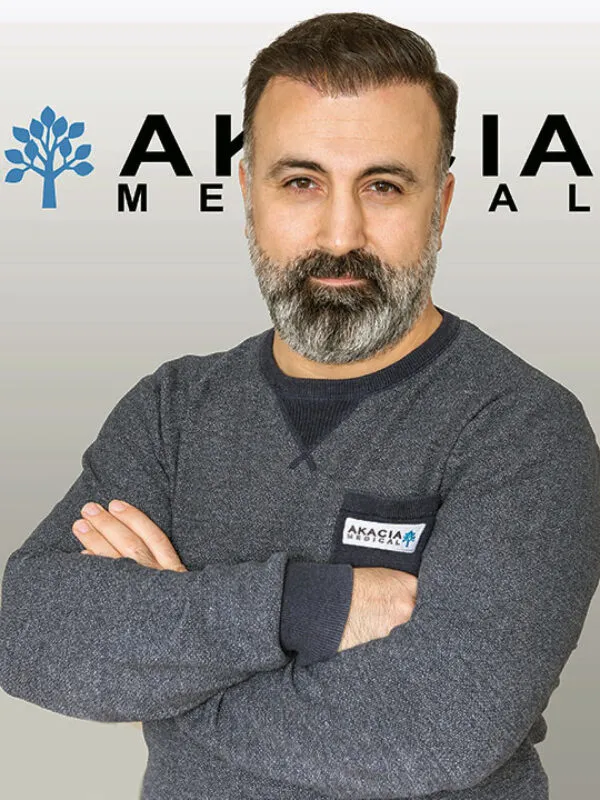
Firo Esmer is CEO and founder of Akacia Medical and writes about hair transplantation, hair loss and treatment planning based on the clinic's experience and patient journey.
References
- 1.Rassman WR, Bernstein RM, McClellan R, Jones R, Worton E, Uyttendaele H. Follicular unit extraction: minimally invasive surgery for hair transplantation. Dermatol Surg. 2002;28(8):720-728.
- 2.Sethi P, Bansal A. Direct hair transplantation: a modified follicular unit extraction technique. J Cutan Aesthet Surg. 2013;6(2):100-105.
- 3.Goldin J, Zito PM, Raggio BS. Hair Transplantation. StatPearls. Updated 2025.
Related articles

September 21, 2026
Hair loss treatments – what actually works
Which hair loss treatments have evidence? Comparison of finasteride, minoxidil, oral minoxidil, PRP and hair transplantation.

September 19, 2026
DHT and hair loss – the hormone behind thinning
DHT is formed from testosterone and can shrink sensitive follicles. How the hormone works, what can be treated, and when a transplant is needed.

September 17, 2026
Minoxidil for hair loss – topical and oral
Guide to minoxidil for hair loss: 2% and 5%, oral minoxidil in Sweden, use in women, timeline and side effects.
Book a free consultation
We will review your circumstances and recommend the right next step for you.