


Which hair loss treatments have evidence behind them, which are available over the counter, and when is medication not enough? Here we compare finasteride, minoxidil, PRP and hair transplantation.
Short answer: in hereditary hair loss, finasteride and minoxidil are the treatments with the clearest evidence. Finasteride is prescription-only and lowers DHT. Minoxidil 2% and 5% is available over the counter as a solution or foam. Oral minoxidil requires a prescription. PRP and hair transplantation are clinical options when medication is not enough, or when the follicles have already stopped producing hair.
Hair loss treatments are not the same thing as the clinic's treatment catalogue. Shampoos, supplements and plant extracts are often sold as the solution, but they do not replace a proper assessment. Which treatment suits you depends on the cause, your sex and how far the thinning has progressed.
What counts as a hair loss treatment?
Hair loss treatments are medicines and procedures aimed at slowing thinning or increasing density. The most common ones with evidence in androgenetic alopecia are finasteride and minoxidil. PRP and hair transplantation are clinical steps, not bottles from the pharmacy.
Comparison: medicines and treatments
| Treatment | What it does | Prescription | Best suited for |
|---|---|---|---|
| Finasteride | Lowers DHT | Prescription-only | Men with hereditary hair loss |
| Minoxidil, topical | Prolongs the growth phase | Over-the-counter | Men and women |
| Oral minoxidil | Same action, via the tablet | Prescription, off-label | When solution or foam is not an option |
| Dutasteride | Stronger DHT reduction | Prescription, off-label | When finasteride is not enough |
| PRP | Growth factors from your own blood | Clinic treatment | Active follicles, complement |
| Hair transplant | Moves more DHT-resistant follicles | Surgery | When the follicles are already gone |
How the most common treatments work
Finasteride inhibits 5α-reductase type II and lowers DHT. Prescription-only, 1 mg daily for male hereditary hair loss. The first choice when the goal is to reduce the hormonal pressure. Contraindicated in female hair loss.
Minoxidil does not block DHT. 2% and 5% solution or foam is available over the counter. Low-dose oral minoxidil is prescription-only and off-label in Sweden. A visible effect is usually assessed after 3 to 6 months.
PRP consists of injections with growth factors from your own blood. A complement while the follicles are still active – not a substitute for finasteride or minoxidil, and not a DHT blocker.
Hair transplantation moves follicles from the back of the head that usually tolerate DHT. It does not protect the native hair that remains. That is why the procedure is often combined with medication. The mature result is assessed at 12 months, sometimes 12–18 months on the crown.
Men and women
Men. In androgenetic alopecia, the combination of finasteride plus minoxidil is common. Finasteride takes the hormonal pressure, while minoxidil drives growth in follicles that still respond. A transplant becomes relevant when the follicles no longer provide enough density.
Women. Female pattern hair loss more often has several causes: hormones, iron, thyroid, menopause. Topical minoxidil is the most studied treatment. Finasteride 1 mg is contraindicated in female hair loss. Investigation comes before a prescription.
What rarely works on its own
Ketoconazole shampoo, biotin and saw palmetto are often sold as hair loss treatments. They can be a complement against dandruff or for a feeling of fuller hair, but they have weaker evidence than finasteride and minoxidil and rarely stop hereditary thinning on their own.
A dermaroller is sometimes mentioned together with minoxidil. It does not replace medication and should not be used on an irritated scalp. Lifestyle, sleep and nutrition matter in telogen shedding, but they are rarely enough for DHT-sensitive follicles.
When a hair transplant is needed
When the follicles at the hairline or on the crown have already stopped producing hair, no treatment is enough. Medication can protect what remains. A transplant moves more DHT-resistant follicles from the back of the head. FUE is planned for up to 3500 grafts, DHI for up to 1500.
Next steps
The right treatment depends on the pattern, the pace and what you have already tried. At the consultation we will tell you whether over-the-counter minoxidil is enough, whether finasteride or PRP makes sense, or whether a hair transplant is what will actually change the density.
Book a free consultation. We compare the treatments against your situation – not against a generic ranking list.
Read more about hair loss and how to stop hair loss.
This text is for informational purposes only. For medical advice or diagnosis, consult a qualified professional.
Frequently asked questions
Tags
Related information
Explore more about our treatments and services

Firo Esmer
CEO, Akacia Medical
Firo Esmer is CEO and founder of Akacia Medical and writes about hair transplantation, hair loss and treatment planning based on the clinic's experience and patient journey.
References
- 1.Kaufman KD et al. Long-term (5-year) multinational experience with finasteride 1 mg in the treatment of men with androgenetic alopecia. Eur J Dermatol. 2002;12(1):38-49.
- 2.Olsen EA et al. A randomized clinical trial of 5% topical minoxidil versus 2% topical minoxidil and placebo in the treatment of androgenetic alopecia in men. J Am Acad Dermatol. 2002;47(3):377-385.
- 3.Lucky AW et al. A randomized, placebo-controlled trial of 5% and 2% topical minoxidil solutions in the treatment of female pattern hair loss. J Am Acad Dermatol. 2004;50(4):541-553.
Related articles

September 19, 2026
DHT and hair loss – the hormone behind thinning
DHT is formed from testosterone and can shrink sensitive follicles. How the hormone works, what can be treated, and when a transplant is needed.

September 17, 2026
Minoxidil for hair loss – topical and oral
Guide to minoxidil for hair loss: 2% and 5%, oral minoxidil in Sweden, use in women, timeline and side effects.
September 10, 2026
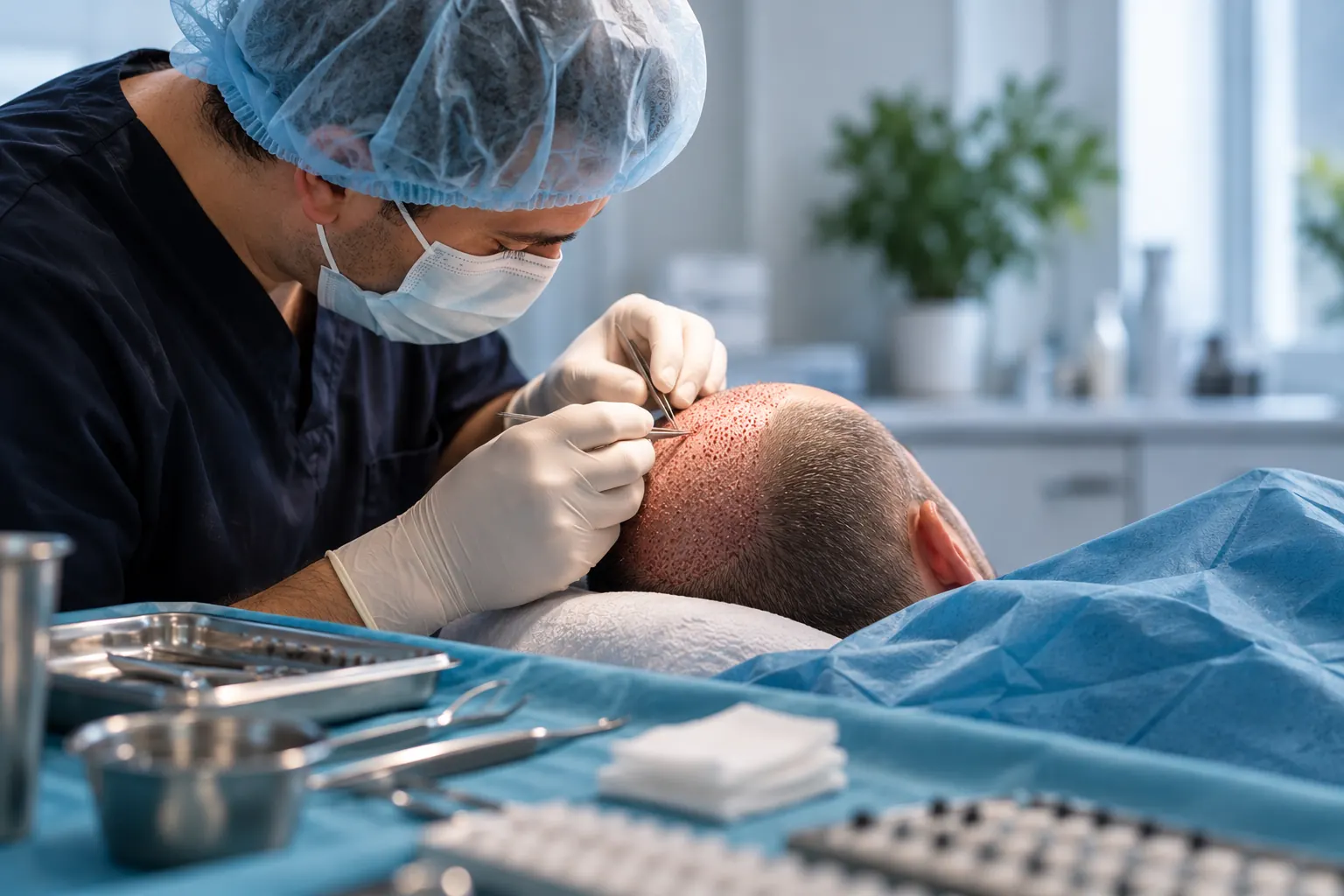
Does a hair transplant hurt?
Does a hair transplant hurt? How local anaesthesia works, what you feel during the procedure and how tenderness is handled in the first days.
Book a free consultation
We will review your circumstances and recommend the right next step for you.