

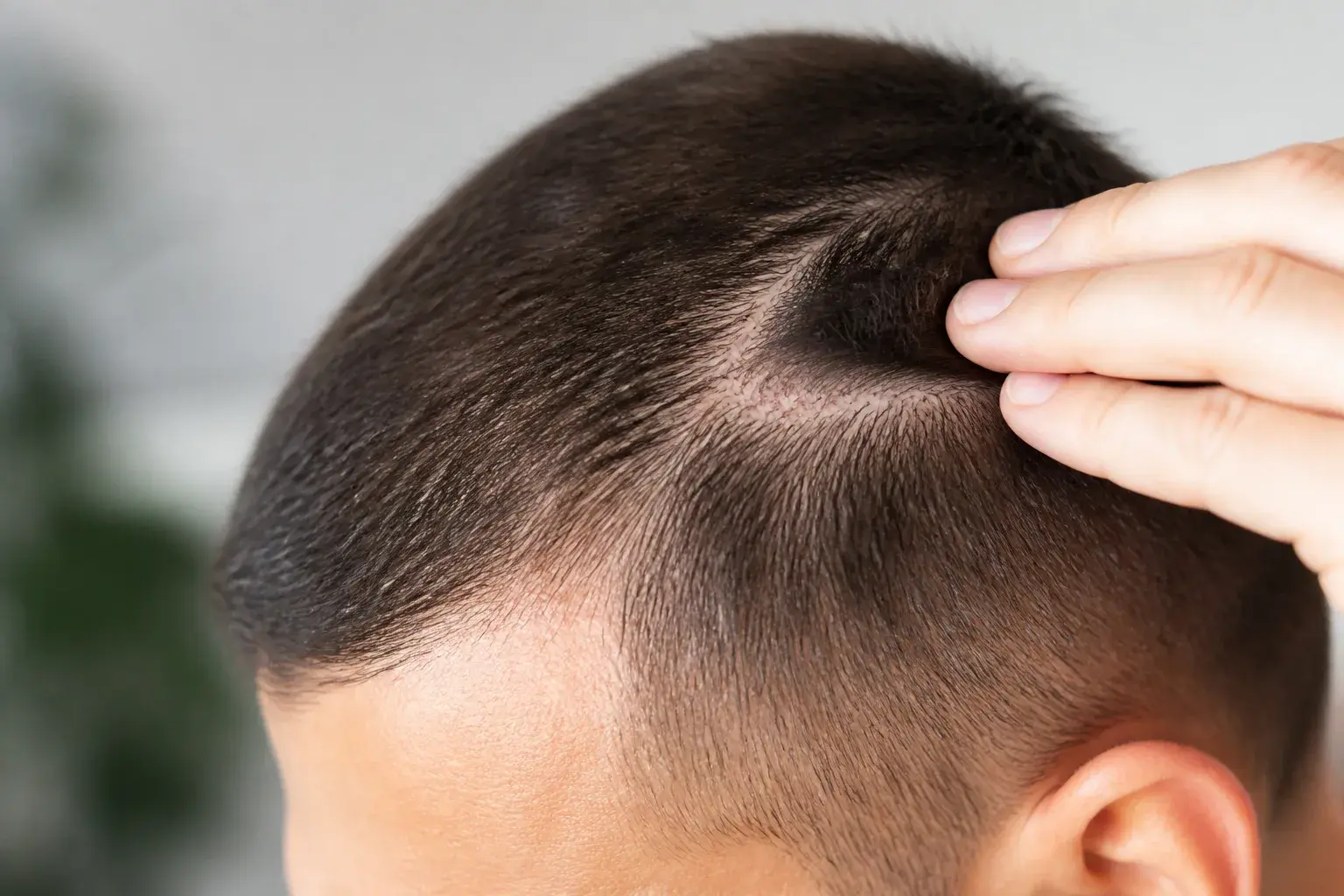
Folliculitis on the scalp is an inflammation or infection in one or more hair follicles. It usually appears as small red spots, tender bumps or pus-filled pimples around individual hairs. Most cases are harmless and heal with gentle self-care or targeted medical treatment, but recurring or deep problems should be assessed in good time to protect the follicles.
Many people confuse the condition with acne, wonder whether it can cause hair loss, or become worried when similar spots appear during aftercare following a hair transplant. The difference between mild irritation and something that needs medical attention lies in how deep the inflammation sits, what caused it, and how quickly it is dealt with.
What is scalp folliculitis?
Scalp folliculitis, also called hair follicle inflammation, occurs when the protective barrier of the follicle is damaged or blocked. Microorganisms, friction or ingrown hairs can then trigger a local reaction from the immune system.
It is easy to mistake the condition for ordinary acne. Acne forms mainly in the sebaceous glands and often produces blackheads, while folliculitis is centred on the follicle opening itself.
The condition is mainly divided into two categories:
- Sterile folliculitis: inflammation without an active bacterial or fungal infection. It is often triggered by mechanical friction, ingrown hairs or microtrauma in the skin, including during healing after a hair transplant.
- Infectious folliculitis: microorganisms make their way down into the follicle. The most common form is bacterial folliculitis caused by Staphylococcus aureus. It can also involve yeast (Malassezia/Pityrosporum folliculitis) or, more rarely, gram-negative bacteria.
Symptoms of scalp folliculitis
The symptom picture depends on how deep the inflammation sits and what caused it. Common signs are:
- Small red bumps or papules around individual hairs
- Pus-filled blisters (pustules) that can burst and form crusts
- Itching, stinging or a burning sensation
- Tenderness when touched, when brushing or when the head rests against the pillow
- Local redness and slight swelling
- Temporary dark patches or crusts during healing
Superficial inflammation often clears up relatively quickly. Deeper involvement can produce larger, more painful nodules and more often requires medical assessment.
Causes of scalp folliculitis
The scalp has a high density of both hair follicles and sebaceous glands, which makes the area sensitive to imbalance.
Bacterial imbalance
When the skin barrier is weakened, bacteria that normally live on the skin can penetrate the follicle opening. Transfer can happen via fingers, unclean hairbrushes, caps or gym equipment.
Blocked pores and excess sebum
Sebum mixed with dead skin cells can block the opening and create an environment where microorganisms multiply. This is part of the explanation for why some people experience both an oily scalp and recurring bumps.
Mechanical friction and shaving
Close shaving, especially against the direction of hair growth, creates microscopic damage. At the same time, tight hats, helmets and caps can trap sweat and moisture.
Ingrown hairs
Curly or coarse hair has a higher tendency towards pseudofolliculitis, where the hair bends back into the skin and triggers sterile inflammation. A similar mechanism is often seen when new hairs break through after a transplant.
Folliculitis after a hair transplant
If you have had or are planning FUE or DHI, it is common to wonder about small pimples or red spots during recovery.
Sterile folliculitis is the single most common mild side effect after a hair transplant in larger clinical cohorts: up to around 7% of patients are affected. It is often caused by ingrown or newly emerging hairs and normally goes away by itself, without specific medical treatment. Bacterial infection after modern FUE under sterile conditions, on the other hand, is very uncommon, something we also describe under hair transplant risks.
During recovery, the symptoms mainly arise when:
- New hairs break through the skin, often from around month 2–6
- Crusts and sebum temporarily block the follicle channel during the first weeks
- The skin's healing after micro-incisions causes mild sterile irritation
In most cases this temporary irritation does not affect the final result. Follow the aftercare instructions, avoid picking or scratching, and contact the clinic if you have pain, increasing redness, fever or yellowish discharge. Read more about expected hair growth after a transplant.
Scalp folliculitis and hair loss
Many people wonder whether scalp folliculitis can lead to hair loss, and whether the condition can cause permanent damage. The answer depends on the depth of the inflammation and how quickly it is treated.
Superficial folliculitis usually causes temporary hair loss
When only the upper part of the follicle is involved, the deeper stem cells are rarely damaged. Hairs may shed more easily for a period, similar to temporary telogen effluvium. Once the inflammation settles, the follicle usually returns to its normal growth cycle.
Deep inflammation and scarring
Long-standing, untreated deep infection can in rare cases destroy the structure of the follicle so that it is replaced by scar tissue. Chronic conditions such as Folliculitis decalvans are uncommon examples of deep inflammation that require specialist investigation. Read more about scarring alopecia and the overview of hair diseases and alopecia.
Treatment of scalp folliculitis
Treatment is adapted to how pronounced the symptoms are and what lies behind them.
Self-care for mild symptoms
- Warm compresses: hold a clean, lukewarm towel against the area for 10–15 minutes a few times a day
- Gentle cleansing: a mild, pH-balanced shampoo, massaged in with your fingertips rather than your nails
- Avoid scratching or squeezing: this spreads bacteria and increases the risk of deeper infection
Medical options
If self-care is not enough, a doctor may consider:
- Antiseptic or antifungal shampoos (for example chlorhexidine or ketoconazole)
- Topical antibiotics for a local bacterial infection
- Systemic antibiotics for widespread or deep infection
- Anti-inflammatory products for non-infectious irritation and intense itching
The right cause determines the right treatment, fungal folliculitis for instance responds poorly to antibiotics alone. In the differential diagnosis, scalp ringworm and sebaceous cysts on the scalp may also need to be ruled out.
Comparison: types of folliculitis
| Type of folliculitis | Common cause | Typical symptoms | Suitable approach |
|---|---|---|---|
| Sterile folliculitis | Friction, ingrown hairs, healing after surgery | Red spots, mild tenderness, usually without pus | Warm compresses, gentle hygiene, aftercare |
| Bacterial folliculitis | Staphylococcus aureus | Pus-filled pimples, redness, pain, crusts | Antiseptic shampoo, topical or systemic antibiotics |
| Pityrosporum folliculitis | Yeast (Malassezia) | Itchy, uniform red papules, often near the hairline | Antifungal shampoo or other antifungal treatment |
| Pseudofolliculitis | Ingrown hairs after shaving | Tender bumps, especially on the neck and beard area | Changed shaving technique, avoid close shaving |
| Acne keloidalis nuchae | Chronic deep inflammation at the nape | Firm nodules that can turn into scars | Specialist care, often steroids or other targeted treatment |
How to prevent hair follicle inflammation
- Wash your hair after heavy sweating, and avoid unnecessarily hot water that dries out the scalp
- Shave in the direction of growth with clean, sharp blades and a mild shaving gel
- Wash hats, caps and pillowcases regularly
- Adapt your routine to your hair type, softening products and gentle combing reduce the risk of ingrown hairs in curly or coarse hair
- After a transplant: follow the washing and wound-care protocol carefully
Folliculitis after a hair transplant at Akacia Medical
When you are planning a hair transplant, it is reasonable to want to understand the whole healing process, including mild reactions such as sterile folliculitis. At Akacia Medical, procedures are performed under sterile conditions by licensed doctors, with clear aftercare and follow-up. That way you know what is expected, and when it is time to get in touch.
If small red bumps or itching appear during regrowth after FUE or DHI with us, follow the aftercare protocol and contact the clinic if the symptoms become painful or pus-filled, or differ from the information you were given. General, recurring folliculitis with no connection to a procedure belongs with your GP or a dermatologist.
Considering a hair transplant? Book a free consultation and we will go through your circumstances, realistic expectations, prices and our guarantees.
Summary and next steps
Scalp folliculitis is common, usually harmless and treatable once the right cause is identified. Superficial symptoms often clear up with self-care, while deeper or recurring inflammation should be assessed medically. After a hair transplant, sterile folliculitis is a known and usually temporary part of healing, while bacterial infection is rare when surgery and aftercare are handled correctly.
Recommended action plan
- Assess the severity: mild, limited symptoms can start with self-care, while spreading, pain or fever requires medical care.
- Protect the follicles: avoid scratching, squeezing and putting strain on the scalp with dirty headwear.
- After a transplant with us: follow the aftercare and contact the clinic if you see warning signs.
- Not related to a procedure: recurring inflammation or suspected scarring alopecia is assessed by your GP or a dermatologist.
Planning a procedure with us? We offer hair transplant, including hair transplant Stockholm and hair transplant in Sweden.
Next steps
- Book a free hair transplant consultation
- Read about aftercare following a hair transplant
- Read about shampoo after a hair transplant
- Read about the risks of a hair transplant
This text is for informational purposes only. For medical advice or diagnosis, consult a qualified professional.
Frequently asked questions
Tags
Related information
Explore more about our treatments and services

Firo Esmer
CEO, Akacia Medical
Firo Esmer is CEO and founder of Akacia Medical and writes about hair transplantation, hair loss and treatment planning based on the clinic's experience and patient journey.
References
- 1.Winters RD, Mitchell M. Folliculitis. StatPearls. Treasure Island (FL): StatPearls Publishing; 2023.
- 2.Garg AK, Garg S. Complications of Hair Transplant Procedures—Causes and Management. Indian J Plast Surg. 2021.
- 3.Saunte DML et al. Position statement: Recommendations on the diagnosis and treatment of Malassezia folliculitis. J Eur Acad Dermatol Venereol. 2023.
- 4.Durdu M, Ilkit M. First step in the differential diagnosis of folliculitis: cytology. Crit Rev Microbiol. 2013.
- 5.The Role of Malassezia in Nonscarring Scalp Folliculitis, The Disease Course, and the Treatment Responses: A Retrospective Case Series. 2024.
- 6.Otberg N, Kang H, Alzolibani AA, Shapiro J. Folliculitis decalvans. Dermatol Ther. 2008.
- 7.Khatib M, Skorochod R, Wolf Y. Complications Following Hair Transplantation: A Systematic Literature Review and Meta-Analysis. 2025.
Related articles
September 16, 2026
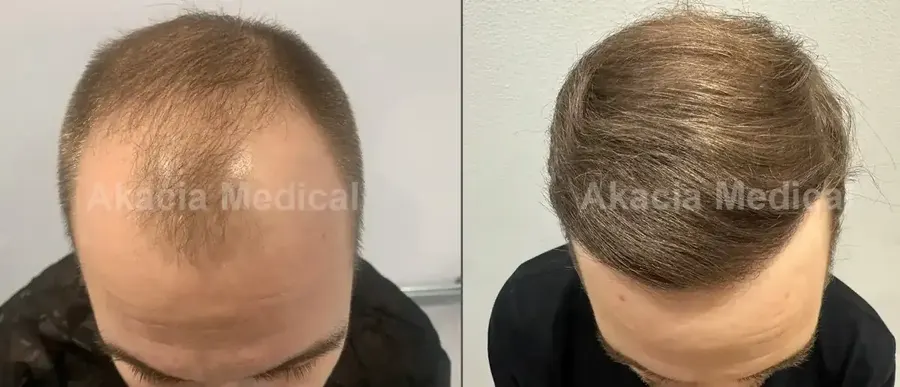
Hair transplant month by month
Hair transplant month by month: what you see after 1, 3, 6 and 12 months. Shock loss, early growth and when the final result can be assessed.
September 10, 2026
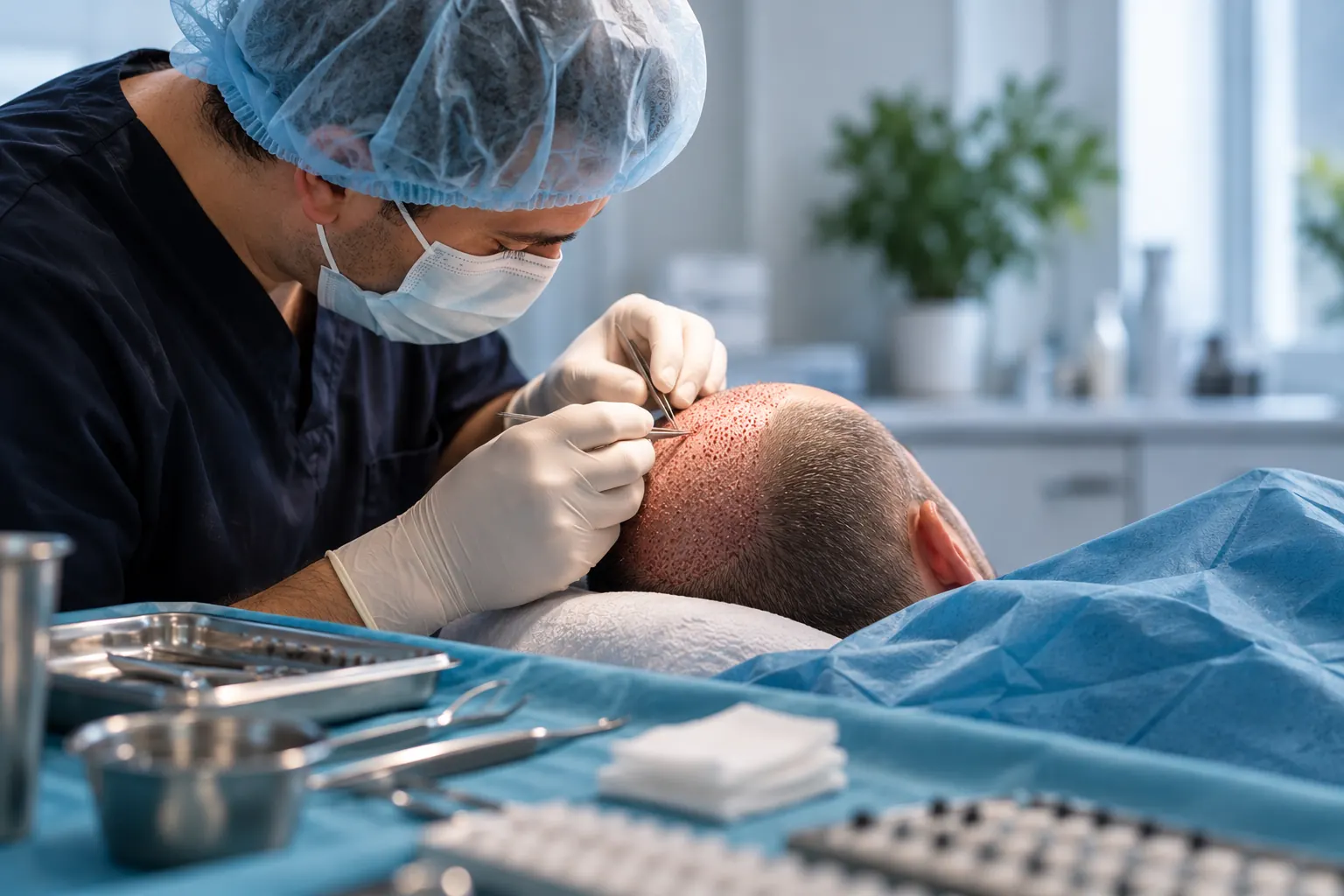
Does a hair transplant hurt?
Does a hair transplant hurt? How local anaesthesia works, what you feel during the procedure and how tenderness is handled in the first days.
September 3, 2026
Hair transplant scars – FUE, FUT and healing
How visible are scars after a hair transplant? The difference between FUE and FUT, healing in the donor area, and how older scars can be hidden.
Book a free consultation
We will review your circumstances and recommend the right next step for you.